johnliddlephotography

Frozen moments from the infinity that is time


4 Comments

Greater Nanzen-ji (Kyoto)

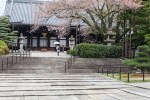
For me the starting point of a visit to Nanzen-ji is when one walks through the short pedestrian tunnel under the Keage incline, which, in the springtime, is awash with cherry blossom.  Continuing down the lane past some wonderful residences, one finds the Konchi-in temple, which has occupied its present location since 1605.

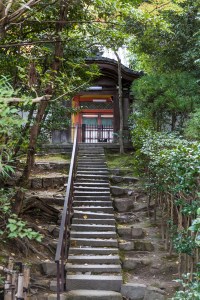
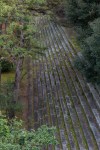
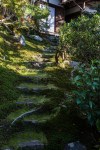
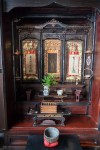
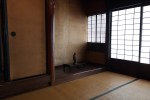
Kyoto is famous for its temples and each temple seems to have a character of its own and when I think of Konchi-in I think of harmony.  Passing through a torii gate as in pic 1 invites reflection and in this photograph I see the harmony of imperfect perfection.  Although the plantings are precise and ordered, the gardeners have followed nature’s lead.  Similarly, the seven-leaf maple cascading over the roof tiles (pic 3) matches the pattern on the circular ends of the tiles.  Finally, even the addition of an electric light fitting above the centuries-old temple door (pic 4) blends with the overall aesthetic of the gloriously weathered colours.

Continuing on to the greater Nanzen-ji complex and passing through the Sanmon Gate (refer to my last posting), one comes across the imposing Hatto Hall.  Unfortunately this lecture hall is not open to the public.  A later addition (in 1890) to the Nanzen-ji complex is the Suirokaku Aqueduct, which appears more Roman than Japanese and is part of the Lake Biwa Canal, which continues to supply more than 90% of Kyoto’s water supply.  Over the years the brick structure has aged gracefully (pics 6 to 8) and has become an attraction in its own right.

Behind the aqueduct is the Nanzen-in Temple, which I associate with a feeling of calm.  The gardens built around the main hall seem to offer an invitation to slow down and indeed, during the autumn, most people simply stop to enjoy the splendrous colours.  A glimpse is given by pics 9 to 12 and the gardens of Nanzen-in are certainly for meandering.

Finally, the Saisho-in Temple (pics 13 to 16) is a small sub-temple dating back to the eighth century and located close to the start of the aqueduct.  The space is embracing, which the inscription shown at pic 16 communicates far more ably than my words.

Perhaps I will return to some of these places in later blogs, but for now I hope you find this little glimpse of the Nanzen-ji complex interesting.

(Please click on any of the following images for an enlarged view.)


1 Comment

Sanmon Gate (Kyoto)

We are all familiar with gates … house gates, station gates, security gates etc.  Kyoto’s Sanmon Gate is altogether different.  In fact, it is a gateless entry to the most sacred part of the Nanzen-ji Temple, which has been at the core of Japanese Zen history since 1386.

The Sanmon Gate is an impressive wooden structure constructed in 1626 and supported by massive wooden pillars that dwarf those passing through its five bays.  One cannot help but feel humbled by such scale and reminded of the opportunity afforded pilgrims to free themselves from the three passions of greed, hatred and foolishness.

As will be seen from the photographs, the Sanmon Gate also serves as a meeting place and a place for reflection, particularly during the cherry blossom season when it becomes a popular platform for hanami (cherry blossom viewing).

Readers who enjoyed the movie Lost in Translation may also recognise the location from the scene where the Scarlett Johansson character (Charlotte) is entranced by witnessing a Shinto wedding group during a day trip to Kyoto.  I’ve only ever seen Shinto weddings at shrines rather than temples, but Hollywood is Hollywood and I still enjoyed the movie.

(Please click on any of the following images for an enlarged view.)


6 Comments

Fushimi Inari Shrine (Kyoto)

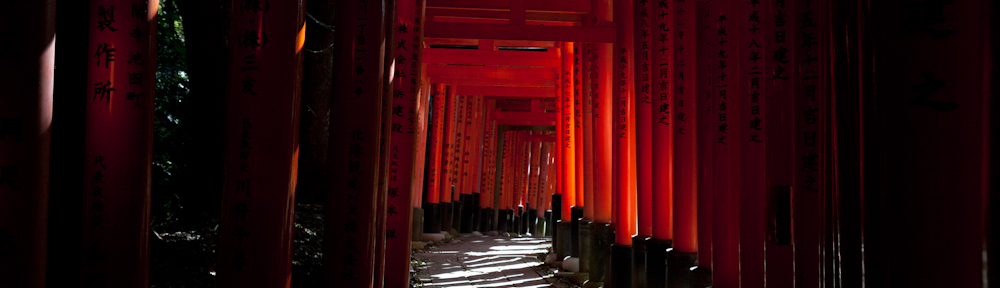
A short train journey from central Kyoto, the Fushimi Inari Shrine is one of Japan’s best known and most venerated shrines.  With its thousands of vermillion coloured torii gates, its impact is both immediate and lasting – particularly for those who allow themselves to be drawn through the gates to explore further.

Torii gates mark the entrance to Japanese shrines and there are many impressive torii gates throughout Japan.  However, nowhere else does one find so many torii in one place.  Each of the Fushimi Inari gates has been donated by a company or an individual seeking good fortune from Inari – the god of rice.

With trails leading up and around a low mountain offering wonderful views over Kyoto, a visit to Fushimi Inari can involve a lot of walking.  I found the various trails to be irresistible, which led to my becoming lost at one point and ending up outside the shrine area.  However, after teaming-up with some Mexican travelers who were similarly lost, together we found our way back.  In fact, getting lost must be easy as several Japanese people asked us for directions.  One presumes they were visiting from elsewhere in Japan.

Readers who remember the movie Memoirs of a Geisha may also remember the scene of the young Sayuri running between Fushimi Inari’s torii gates dreaming of her future life as a geisha.  Perhaps the scene had a healthy dose of poetic licence, but it nevertheless shows the ability of the location to inspire.

(Please click on any of the following images for an enlarged view.)


Leave a comment

Tsukiji Fish Market

I confess!  This is a photographic blog about the world’s biggest fish market without any photos of fish.  However, who needs fish?  This market, like famous markets everywhere, is about its people.  Those who work here, shop here and pass through on the way to or from somewhere else.  Among other things, Tsukiji is another piece of the Japanese food experience and is a popular breakfast venue, as shown by several photos of people hunting for breakfast and their providers.

The basic tool of trade is, of course, the knife – another area where Japanese craftsmanship is revered.  A good blade is essential and the knife sharpener (pic 6) and the knife merchant (pic 7) are integral to the market’s operations.  I was also fascinated by the clerks (pics 9 & 10) who were totally absorbed in their work.  They rarely look up and would seem to rely on old skills and technologies to keep business running smoothly.

Tsukiji is an old market and as shown by pics 1 & 12 and is very much a working place that wears its scars, through which its story can be imagined.  Trolleys like the one in pic 11 symbolise this and although well worn from years of daily hard work, it retains an honest beauty.

All things come to an end and like other great markets in London and elsewhere, Tsukiji Fish Market will soon relocate to enable its prime location to be redeveloped.  Perhaps in time the new market will also capture our imagination, but for now I’m pleased to have my memories and photos of how people working from a collection of big, untidy sheds have created a much-loved institution.

(Please click on any of the following images for an enlarged view.)


Leave a comment

Cafés & Coffee

For a country where the tea ceremony is an integral part of its cultural heritage, the Japanese people also appear to enjoy the pleasure of lingering over a coffee – particularly in the major cities where cafés abound.  Currently, the coffee scene is dominated by franchise operators, although one does find interesting independent cafés, which, as the coffee culture becomes more established, are likely to become more popular.

The first three photographs show examples of three popular franchises and I must say I would not be surprised if Tokyo is the Starbucks capital of the world.  They are everywhere!  The Shibuya Crossing Starbucks (pic 1) is probably the most prominent and is a great place for people watching, as is the Café Doutor (pic 2) overlooking the Ginza Crossing.

However, the variety and individuality of independent cafes can be seen from the other photographs such as Kyoto’s Café Yoshiko (pic 4) where customers can enjoy views of autumn colour and cherry blossom in season.  Similarly, the stark white minimalist look of the café in Niigata (pic 6) is so Japanese and The Deck at Harajuku (pic 7) is a great place for a warm snack and coffee.

Other places I remember fondly is Binya café (pic 8) in Ebisu.  I first came across Binya while walking to Tokyo’s magnificent Museum of Photography.  Enjoying coffee served in fine china is relaxing and a nice break from the hectic pace of life so characteristic of Tokyo and the temptation to order “takeaway”.

Wandering through Kiyojima (one of Tokyo’s old areas) led me to MuuMuu Coffee (pics 9 & 10) where I enjoyed lunch and a chat, only to learn that the barista had learnt his skills working in cafés in Melbourne (my home town).  Sometimes it truly is a small world.

My final shots are of Café Mazekoze in Nagano where I was (as usual) wandering the streets after visiting the Zenkoji Temple.  I was at first attracted by the bric-a-brac outside, but upon walking through the door I was immediately allured by the aroma of freshly brewed coffee.  Quite irresistible!  Again, conversation with the owner revealed another “small world” experience in that her sister now lives in Edinburgh – where I was born and grew up.  It is meetings like these that enrich travel and as so often happens, I left with a recommendation to visit another nearby temple.

Coffee breaks not only refresh us, but they can result in lasting memories of places visited.  I hope these photos help you to remember similar experiences.

(Please click on any of the following images for an enlarged view.)

Steps

2 Comments

Wherever one travels there are always recurring photographic subjects.  Sometimes we seek them out and others just seem to accumulate as the trip goes on.  One of my recurring subjects was steps, though there is more as will be seen in future posts.

Steps seemed appropriate for my final post of 2013.  As we approach 2014, many people will make resolutions and set goals for the New Year, some of which will be pursued and achieved.  Reaching a goal requires taking the necessary steps and I hope that someone may find among these photographs, an image to help them focus on their goals.  If you do, please write and let me know.

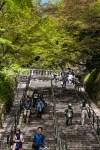
The images are varied and speak for themselves.  Some were taken for their simple beauty; others such as the mum keeping a close eye on her energetic daughter are universal; and others such as the monks returning to their quarters at day’s end capture a scene that has travelled through the ages.

I wish everyone a happy, safe and successful new year and I look forward to sharing more of my photographs with you in 2014.

(Please click on any of the following images for an enlarged view.)


This gallery contains 12 photos


4 Comments

Hida No Sato

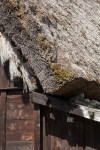
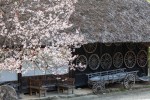
The Hida Folk Village (Hida No Sato) is located in the town of Takayama and is best described as a living museum of traditional houses relocated from around the Hida region.  Although the region is agriculturally poor, its mountain location has provided access to other resources – principally timber and water.  These in turn have historically produced highly skilled carpenters whose craft is evident in the Edo Period (1603 – 1867) houses within the village and a long established sake brewing industry built around the area’s pure water supply.

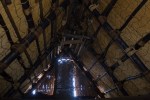
Exploring Hida No Sato is to step back in time.  Fires are lit daily in the hearths of each house to help preserve the houses and add further atmosphere.  The first photograph shows examples of Gassho style buildings, which take their name from their steeply sloping thatched roofs resembling “gassho” (praying hands).  An internal view of this style (photograph 12) shows the intricate workmanship and how the ends allow air and light to circulate, conditions essential to silkworm cultivation.

I found it comforting to know that these old wooden houses will live on as a living example of a bygone era.  Finally, thanks for reading my blog and I wish you a very happy Christmas.

(Please click on any of the following images for an enlarged view.)


Leave a comment

Nara

Nara is historically significant as Japan’s capital from 710 to 784 – the period when Buddhism was at its height and spreading widely through Japan.

Despite this historical significance, one’s first impression of Nara is more likely to be the sight of deer freely roaming in Nara Park and the nearby public areas, much to the delight of residents and visitors.  The deer are considered to be messengers of the gods and are protected as national treasures.

The dominant location in Nara is the Todaiji Temple, within whose grounds lies the Great Buddha Hall or Daibutsuden – the world’s largest wooden building.  The scale of the Daibutsuden becomes more apparent upon entering when one first encounters the giant bronze and wooden statues of Buddhas and their guardians.

It is from these locations that today’s photos are drawn and from their ability to impress today, one can imagine the power and influence centred in Nara during its period as Japan’s capital.

 (Please click on any of the following images for an enlarged view.)


1 Comment

Ryoanji in Autumn

Ryoanji (the Temple of the Dragon at Peace) is located in the foothills northwest of Kyoto.  If visiting, I would recommend travelling on the small train of the Keifuku Kitano Line to enjoy a view of residential life in Kyoto.

Ryoanji is a Zen temple most famous for its karesansui (rock garden), which is said to be the finest garden of its type.  The karesansui will be the subject of a later post, though glimpses of the magnificent garden wall can be seen in photos 6 and 7.  For this post I simply want to share the beauty of Ryoanji’s other garden areas during autumn, particularly those around the Kyoyochi Pond, built in the 12th century and pre-dating the temple buildings of the late 15th century.

“I learn only to be contented” is the translation of an inscription on a stone washbasin for Ryoanji’s tea-room (not open to the public).  Zen considers those who learn only to be contented to be spiritually rich.  My hope here is less ambitious and is simply that you may find contentment in the images.

(Please click on any of the following images for an enlarged view.)

Autumn in Japan

5 Comments


Irrashaimase or welcome to my first post.  It’s now Autumn in Japan, so it seems right to share some photographs of the seasonalAutumn colours.  Science may explain the colour changes as a chemical reaction to trees shutting-off nutrition to the leaves, but I prefer to think of it more simply as nature’s way.  To survive the winter it is necessary to shed, but not before putting on a spectacular colour display to awe all who witness it.  

To say the Autumn colours are celebrated is an understatement.  I was totally unprepared for the number of people of all ages who flock to gardens, parks and temples, particularly at weekends and public holidays, to enjoy the annual visual feast.  However, this adds to the experience and demonstrates how integral the seasons are to the Japanese culture and lifestyle.  Indeed, one feels some envy that such a natural phenomenon as seasonal change is so appreciated and that community pleasure is derived from such a natural and recurring event.  Of course, Japan has the advantage of enjoying four distinct seasons – an advantage not shared by all countries.  Nevertheless, there is a lesson to be learned from Japan’s appreciation of nature.

I do have one wish though and that is that the authorities would be less efficient in clearing away the fallen leaves.  They make a beautiful carpet and one of life’s little pleasures is walking through a carpet of rustling leaves no matter what age we are.  Enjoy!

(Please click on any of the following images for an enlarged view.)